The short answer: yes, you can work on sleep without leaving your baby to cry alone. You stay beside the crib while they fall asleep, and step back a little at a time over a few weeks.
I can't promise you no tears. Babies often cry when something changes. The difference is that you're right there.
Is sleep training the same as cry it out?
No. Cry it out usually means putting your baby down and not going back in. That's one approach, and it's the one most parents picture when they hear "sleep training."
There are others. In some, you go back in for short check-ins. In others, you never leave the room at first. Neither plan in my guide asks you to leave your baby to cry alone for hours.
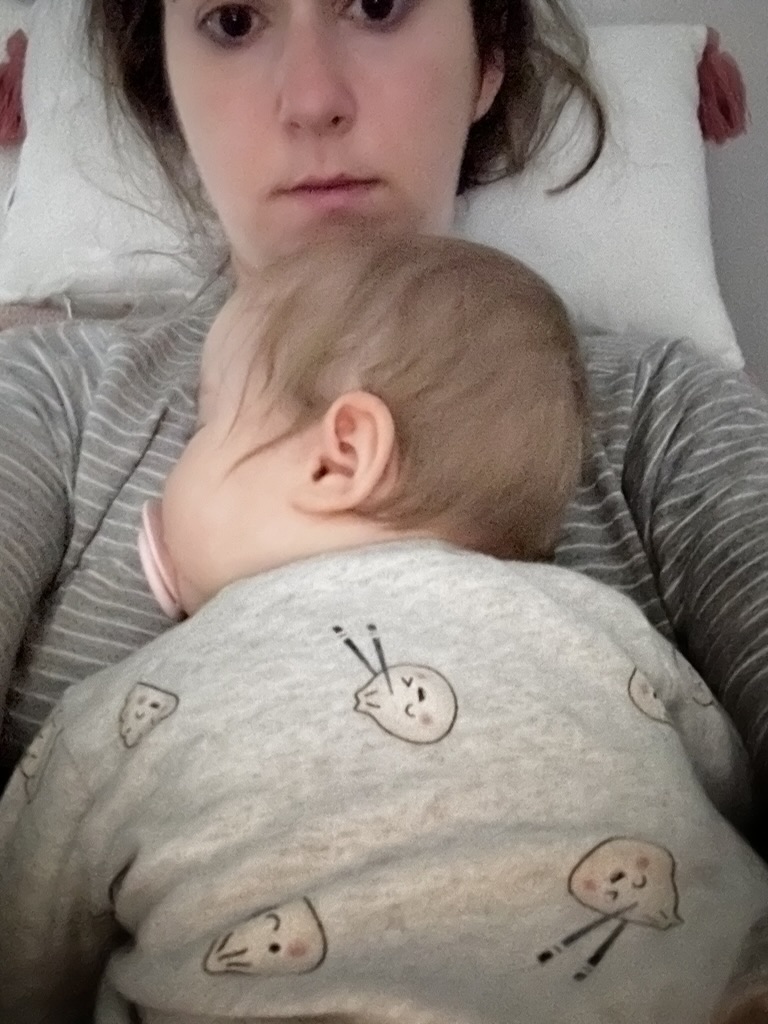
I've been there. I didn't want to do any cry it out. In my head, it meant leaving my daughter to cry for endless amounts of time. But I couldn't keep going the way we were, either. I believed there had to be a better way.
What is gentle sleep training?
It's a gradual way to help your baby fall asleep in the crib with less and less help from you. You start close and move away slowly. You may have seen similar approaches called the chair method or camping out.
In my guide, it's the Stay-Close Plan. It may suit you if you'd rather stay close, and you're comfortable making changes gradually over several weeks.
How to start gentle sleep training
-
Pick a good time
Choose a few weeks with no travel. If they have a fever or a tooth about to come through, wait until they're back to their usual self.
-
Set up bedtime
Same steps, same order, every night, with the feed at the start. Then into the crib drowsy, on their back, with a short sleep phrase like "Nighty night, time to sleep."
-
Start beside the crib, with touch
Sit beside the crib and gently pat their tummy, without talking. Still upset? Stop patting and shush quietly instead. Stay until they're asleep. Here's that first step in more detail.
-
Then your voice only
Over the nights, use less touch, until you're beside the crib and only shushing.
-
Then move your chair
To the middle of the room, then by the door, then out of the room. You'll often stay on one stage for several nights.
-
Use the same stage at every waking
Whatever stage you're on at bedtime, use it for every waking that night, once any feeding or care is done.
If they get very upset, you can pick them up. Hold them until they're calm, not asleep, then lay them back down.
How do I get my baby to self soothe without crying it out?
You can't make a baby self soothe. You can give them the chance to practise, with you nearby.
Crying usually comes in waves: louder, then quieter, then louder again. The quiet moments are often when they're practising settling themselves. You might see them suck a hand, roll their head, kick, babble or whine. Over the nights, you'll often see more quiet moments and fewer loud ones.
So when you're beside the crib, your job is to calm them, not to get them to sleep. Falling asleep is their job now.
Does gentle sleep training work? What the research shows
I'd rather tell you what we know than oversell it.
The stay-close approach was tested in one small pilot study of babies 4 to 12 months. Parents in it reported less stress. The study didn't measure babies' longest stretch of sleep, and it didn't say how long the approach takes.
The approach with the strongest research behind it uses short check-ins, and it does involve some crying. That doesn't make it the right one for you. The best plan for you is the one you can stick with, and choosing check-ins doesn't make anyone a worse parent, either.
Sources: Blunden et al., Archives of Women's Mental Health, 2022; Hall et al., BMC Pediatrics, 2015; Gradisar et al., Pediatrics, 2016.
How to tell if it's helping
Pick a day to look back before you start. A week is a good choice. Then look at the whole week, not one night:
- They fall asleep faster than on night one
- They settle with less help
- There are fewer tears at bedtime
- Their longest stretch of sleep is getting longer
- The nights feel more manageable
A heads-up from me: this asks for patience, night after night, for a few weeks. Before you start, think about what you can keep doing at 2 a.m.
Safe sleep, every sleep · not a choice, always
- On the back, firm flat mattress, nothing else in the crib
- Never on a couch, armchair, swing or bouncer
- Stop swaddling once your baby shows signs of rolling
- If you feed in your bed, put your baby back in their own sleep space before you go to sleep. If you might fall asleep during the feed, move pillows, blankets and loose bedding away first. If you do fall asleep, move your baby back as soon as you wake
When to stop and get help
- They seem sick or hurt: stop for tonight. Care for them, and check with their doctor.
- Their breathing seems off: go in right away. If they're struggling to breathe, call 911. Otherwise, take them to the emergency department.
- You feel angry or upset: put them down somewhere safe, like their crib, and step away for a moment to calm yourself.
- For you: in crisis or thinking about harming yourself? Call or text 988 (US and Canada).
Want every stage, written out?
My guide, There Has to Be a Better Way, gives you all six stages of the Stay-Close Plan, when to move on, what to do at 2 a.m., and the Check-In Plan if you'd rather. For babies 6 to 12 months.
See the guideBaby under 6 months? The guide starts at 6 months. Until then, my free 3-night sleep tracker is the place to start. Get the free tracker
Related: Baby only sleeps when held? · Baby waking every hour at night? · How to stop feeding your baby to sleep · Chair method vs Ferber · Is sleep training bad for babies?
Questions parents ask
How do I sleep train a 6 month old without crying it out?
The steps are the same from 6 to 12 months: a steady bedtime routine, into the crib drowsy but awake, and you beside the crib, giving a little less help over the nights. Born early? Use their adjusted age, counted from their due date.
Is gentle sleep training bad?
No. If staying close fits you and your baby, it's a fair choice. The trade-off is time: it asks for patience, night after night, for a few weeks.
Does gentle sleep training work?
The research is thin, and I'd rather tell you that than oversell it. The stay-close approach was tested in one small pilot study. Parents in it reported less stress. It didn't measure babies' longest stretch of sleep. Track your own nights for a week and look at whether it's helping your family.
How long does gentle sleep training take?
The study didn't say. In my Stay-Close Plan, you step back over a few weeks, and you'll often stay on one stage for several nights.
Gentle sleep training isn't working. What now?
Give it until the look-back day you picked, since changing approach partway through can confuse your baby. If you've been on one stage for about a week, try the next one anyway. And if your baby gets more upset with you in the room, short check-ins may suit them better.
Is sleep training the same as cry it out?
No. Cry it out usually means putting your baby down and not going back in. Sleep training covers many approaches, including ones where you stay in the room or go back for check-ins.
Can my baby sleep through the night without sleep training?
Some babies do, in their own time, and many babies 6 to 12 months old still wake at night. Waiting is a fair choice. So is changing something.
Can I do gentle sleep training with a 4 or 5 month old?
The plans in my guide are written for babies 6 to 12 months. For a younger baby, start with my free 3-night sleep tracker, and come back to the guide when your baby turns 6 months.