The short answer: the studies that went looking for harm didn't find it. One checked on babies a year later. Another checked on children at age 6. Neither found differences in attachment, behaviour or emotional health.
Those studies have limits, and they were done with babies about 6 months and older. So I won't tell you it's proven safe for every baby. And I won't tell you that you have to do it.
Is sleep training the same as cry it out?
No. And this is where a lot of the fear comes from.
Researchers separate two things. In one, your baby goes to bed and you don't go back in until morning, other than to keep them safe. In the other, you do go back in: short check-ins, with waits that slowly get longer. Other approaches keep you in the room the whole time.
The two studies below tested the second kind and gentler ones. They didn't test leaving a baby until morning, and my guide doesn't include it.
Source: Mindell et al., Sleep, 2006 (American Academy of Sleep Medicine review).
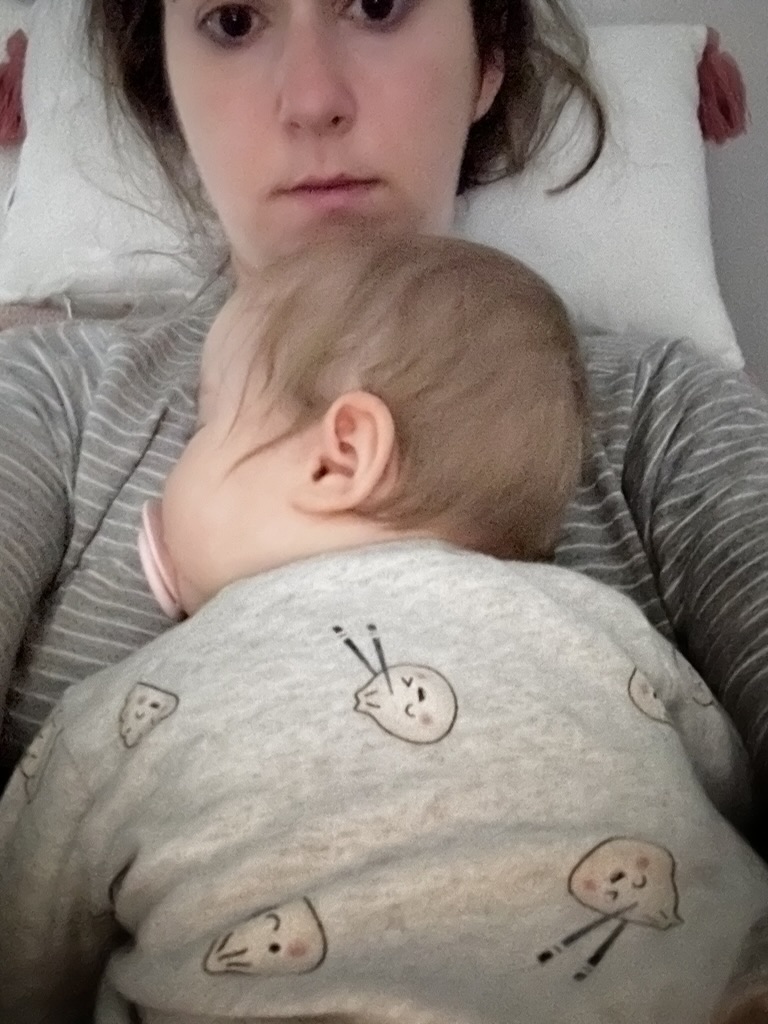
I was scared of it too. When my daughter was a baby, I didn't want to do any cry it out. In my head, it meant leaving her to cry for endless amounts of time. Later, I trained as a sleep consultant and went back to read what the studies had tested.
Is sleep training harmful? What two studies looked for
One year later
43 babies, 6 to 16 months old, were put into three groups by chance. One group's parents used check-ins. One moved bedtime later. One got sleep information only.
The researchers measured the babies' stress hormone, cortisol. It didn't go up in the two sleep-plan groups. A year later, they found no significant differences between the groups in attachment, or in emotional and behaviour problems.
The limit: it's small. About 14 babies in each group.
Five years later
326 babies had sleep problems at 7 months. Some families were offered sleep help from a nurse when their baby was 8 to 10 months old. The rest got the usual care.
At age 6, the researchers found no evidence of differences between the two groups: not in the children's emotions, behaviour or stress, and not in how close they were with their parents.
The limit: about 3 in 10 families weren't seen at age 6.
The second team summed it up as "no marked long-lasting effects (positive or negative)."
Sources: Gradisar et al., Pediatrics, 2016; Price et al., Pediatrics, 2012.
Does sleep training raise cortisol? Where the worry comes from
Mostly from one study. It followed 25 babies, 4 to 10 months old, in a 5-day sleep programme in a hospital. By the third night, the babies had stopped crying at bedtime, but their stress hormone was still raised.
That finding deserves to be taken seriously. It's also one small study, and it didn't follow the babies afterward to see what happened next.
Two later studies compared groups of babies. Neither found higher stress hormone levels in the babies whose parents used a sleep plan. Researchers still disagree about what the hospital study means.
Sources: Middlemiss et al., Early Human Development, 2012; Gradisar et al., Pediatrics, 2016; Blunden et al., Archives of Women's Mental Health, 2022.
What the research can't tell you
- How your baby will respond. A study gives an average across many babies. Yours is one baby.
- Anything about babies under 6 months. The studies on this page were done with babies about 6 months and older.
- Whether every method is the same. Some popular ones, like pick up put down, haven't been tested on their own.
- That harm is impossible. "We looked and didn't find it" is not the same as "it can't happen." It's still the best information we have.
Does sleep training work?
In the largest study behind my Check-In Plan, 235 families took part. Parents who learned the plan wrote down fewer wakings, felt less tired, and their mood improved.
Here's the part most pages skip. Sensors worn by the babies didn't show a significant difference in how many times they woke.
So I don't promise that your baby will sleep through the night. I can show you a plan, and how to tell if it's helping.
Source: Hall et al., BMC Pediatrics, 2015.
Is sleep training necessary?
No. Many babies 6 to 12 months old still wake at night. In one study of 388 babies, the ones who weren't sleeping through were not behind in their development.
It doesn't mean you did anything wrong. If your nights work for your family, you don't need to change them. And you can still decide it's time for a change.
Source: Pennestri et al., Pediatrics, 2018.
Is sleep training cruel, or selfish?
I firmly believe that following a plan and being a good parent are not the same thing.
My own sleep mattered too. Not because I was a bad mom without it, but because I deserved rest as well. Looking after your own rest is part of looking after your baby.
Parents who use check-ins love their babies. So do parents who never sleep train. Neither choice makes you a better or worse parent.
If you decide to try, how to start
-
Decide if anything needs to change
Write down 2 or 3 normal nights first. If what you see works for you, you can stop here.
-
Check the timing
My plans are for babies 6 to 12 months. Born early? Use their adjusted age. Pick a few weeks with no travel, and wait if they have a fever or a tooth about to come through.
-
Pick the plan you can follow at 2 a.m.
The Check-In Plan has you leave the room and come back for short check-ins. There will be some crying. The Stay-Close Plan keeps you beside the crib at first, and you step back over a few weeks.
-
Pick a day to look back
A week is a good choice. Then ask: is this helping? If it isn't, you can change the plan or stop.
Safe sleep, every sleep · not a choice, always
- On the back, firm flat mattress, nothing else in the crib
- Never on a couch, armchair, swing or bouncer
- Stop swaddling once your baby shows signs of rolling
- If you feed in your bed, put your baby back in their own sleep space before you go to sleep. If you might fall asleep during the feed, move pillows, blankets and loose bedding away first. If you do fall asleep, move your baby back as soon as you wake
When to stop and get help
- They seem sick or hurt: stop for tonight. Care for them, and check with their doctor.
- Their breathing seems off: go in right away. If they're struggling to breathe, call 911. Otherwise, take them to the emergency department.
- You feel angry or upset: put them down somewhere safe, like their crib, and step away for a moment to calm yourself.
- For you: in crisis or thinking about harming yourself? Call or text 988 (US and Canada).
Want a plan that doesn't leave your baby to cry alone for hours?
My guide, There Has to Be a Better Way, gives you two plans that come from research, a one-page chart for the middle of the night, and a way to tell if it's helping. For babies 6 to 12 months.
See the guideBaby under 6 months? The guide starts at 6 months. Until then, my free 3-night sleep tracker is the place to start. Get the free tracker
Related: Sleep training without crying it out · Chair method vs Ferber · Baby waking every hour at night? · Baby only sleeps when held? · How to stop feeding your baby to sleep
Questions parents ask
Is sleep training the same as cry it out?
No. Researchers separate two things. In one, you don't go back in until morning, other than to keep your baby safe. In the other, you go back in for short check-ins. Other approaches keep you in the room the whole time. My guide doesn't include the first one.
Is sleep training bad for attachment?
Two studies looked. One checked attachment a year later, and one checked how close children and parents were at age 6. Neither found a difference between families who got sleep help and families who didn't. Both studies have limits, so I say they didn't find harm, not that harm is impossible.
Does sleep training raise cortisol levels?
One small study of 25 babies in a hospital sleep programme found the stress hormone was still raised on the third night. Two later studies that compared groups of babies did not find higher stress hormone levels in the babies whose parents used a sleep plan.
Is gentle sleep training bad for babies?
I haven't found a study showing harm from staying close and stepping back slowly. In one small study of a responsive approach, mothers reported less stress, and the babies' stress hormone levels were no different from the other groups.
Is sleep training necessary?
No. Many babies 6 to 12 months old still wake at night, and in one study, babies who didn't sleep through were not behind in their development. If your nights work for your family, you don't need to change them.
Is sleep training at 4 months too early?
The studies on this page were done with babies about 6 months and older, so they can't answer that. My plans are written for babies 6 to 12 months. For a younger baby, start with my free 3-night sleep tracker.
Does sleep training work long term?
In the study that followed children to age 6, sleep looked about the same in both groups by then. The benefit the researchers describe is in the short to medium term: easier nights now, for your baby and for you.
Is sleep training selfish?
No. Wanting sleep isn't selfish. Looking after your own rest is part of looking after your baby. And choosing not to sleep train doesn't make you a pushover. Neither choice makes you a better or worse parent.