The short answer: stop trying to move a sleeping baby. Put them in the crib drowsy but still awake, and stay right beside them while they fall asleep there.
Then, over the nights, give a little less help and move a little farther away. You don't have to leave them to cry alone.
Why does my baby only sleep when being held?
You didn't do anything wrong. Babies often link falling asleep to whatever is there when they drift off, like being fed, rocked or held.
And we all wake up between sleep cycles, many times a night. As adults, we're usually good at putting ourselves back to sleep. Babies are still learning. So when they wake between cycles and your arms are gone, they look for them again.
That's also why the careful transfer into the crib so often fails. They fell asleep in one place and woke up in another.
If holding your baby to sleep works for you, you don't have to change it. It's worth changing only if it has stopped working for your family.
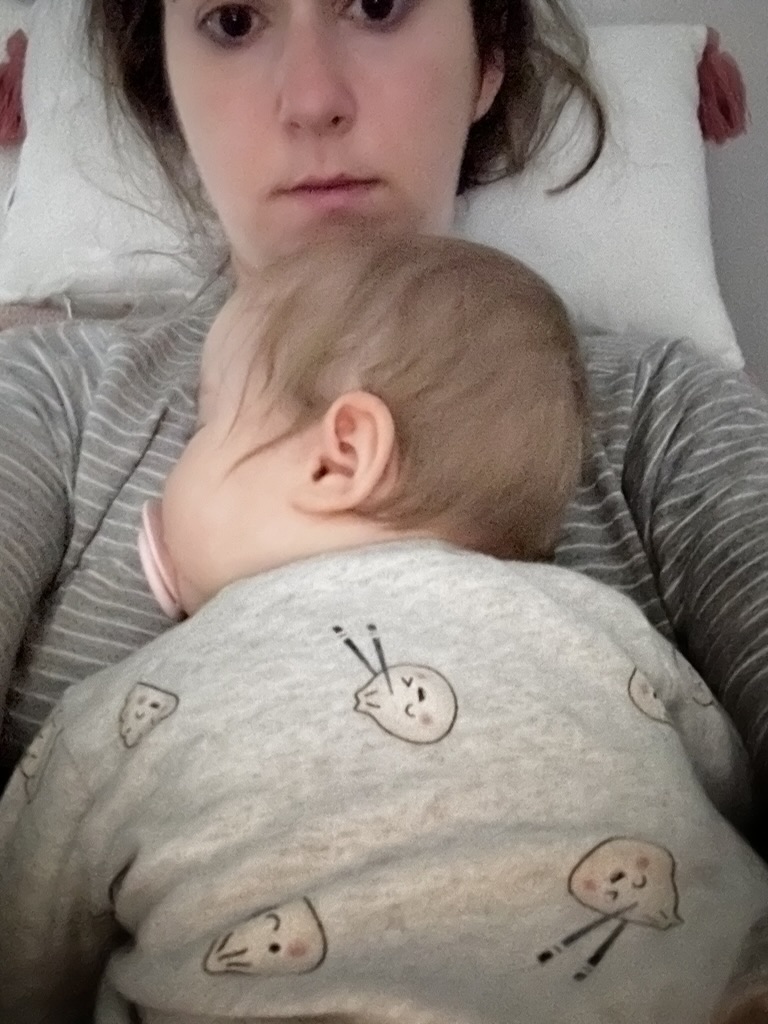
I've been there. When my daughter was a baby, her best stretch of sleep was about four hours, on my chest. I'd start to doze off in the rocker and be scared to, because she was on me.
First, the part about safety
Holding your baby while you're awake is one thing. Falling asleep with them on you is another, and when you're this tired, it can happen without you meaning to.
If your eyes are closing while you're holding them, put them in the crib first. Never sleep with your baby on a couch or in an armchair.
How to get your baby to sleep in the crib instead of your arms
This is the start of my Stay-Close Plan. It's based on a gradual bedtime approach that researchers tested.
-
Keep bedtime in the same order
Feed, bath or a quick wipe-down, diaper and pyjamas, a song or a short book, white noise on, lights off. Try not to rock them during the song or book.
-
Put them in the crib drowsy, on their back
Drowsy means calm and sleepy, but still awake. Your routine usually gets them there. Say a short sleep phrase, like "Nighty night, time to sleep," then stop talking.
-
Sit beside the crib
Gently pat their tummy, without talking. Still upset? Stop patting and shush quietly instead. Stay until they're asleep, then wait a few minutes and leave quietly.
-
If they get very upset, you can pick them up
Hold them until they're calm, not asleep, then lay them back down on their back. If they get more upset each time you put them down, stop picking them up. Comfort them in the crib instead, with a hand on their chest and shushing, until they're calm.
-
Over the nights, do a little less
Use less touch and more of your voice. Then, little by little, move your chair farther away. You'll often stay on one step for several nights. Expect a harder night or two each time you change something.
-
Do the same thing at every waking
When they wake in the night, take care of any feeding or care first. Then settle them in the crib the same way you did at bedtime.
What the research did and didn't show
This approach comes from a small pilot study of babies 4 to 12 months. Parents in it reported less stress. The study didn't measure babies' longest stretch of sleep, and it didn't say how long the approach takes. Go at your family's pace.
Source: Blunden et al., Archives of Women's Mental Health, 2022.
A heads-up from me: this asks for patience, night after night, for a few weeks. Before you start, think about what you can keep doing at 2 a.m.
If staying close makes it worse
Some babies get more upset with you in the room. If that's yours, short check-ins may suit them better: you put them down awake, leave, and go back in for brief check-ins, with waits that slowly get longer. There will be some crying. It's the approach with the strongest research behind it.
Neither choice makes you a better or worse parent. The best plan for you is the one you can stick with.
Sources: Hall et al., BMC Pediatrics, 2015; Gradisar et al., Pediatrics, 2016.
Safe sleep, every sleep · not a choice, always
- On the back, firm flat mattress, nothing else in the crib
- Never on a couch, armchair, swing or bouncer
- Stop swaddling once your baby shows signs of rolling
- If you feed in your bed, put your baby back in their own sleep space before you go to sleep. If you might fall asleep during the feed, move pillows, blankets and loose bedding away first. If you do fall asleep, move your baby back as soon as you wake
When to stop and get help
- They seem sick or hurt: stop for tonight. Care for them, and check with their doctor.
- Their breathing seems off: go in right away. If they're struggling to breathe, call 911. Otherwise, take them to the emergency department.
- You feel angry or upset: put them down somewhere safe, like their crib, and step away for a moment to calm yourself.
- For you: in crisis or thinking about harming yourself? Call or text 988 (US and Canada).
Want every stage, written out?
My guide, There Has to Be a Better Way, gives you all six stages of the Stay-Close Plan, the Check-In Plan, and a way to tell if it's helping. For babies 6 to 12 months.
See the guideBaby under 6 months? The guide starts at 6 months. Until then, my free 3-night sleep tracker is the place to start. Get the free tracker
Related: Baby waking every hour at night? · How to stop feeding your baby to sleep · Sleep training without crying it out · Chair method vs Ferber · Is sleep training bad for babies?
Questions parents ask
Is it OK if my baby sleeps on me?
While you're awake, that's your choice, and if it works for you, you don't have to change it. The risk is falling asleep with your baby on a couch or armchair. If your eyes are closing while you're holding them, put them in the crib first.
Why does my 9 month old wake up every time I put him down?
Babies often link falling asleep to whatever is there when they drift off. If that's your arms, the crib feels different, and they look for you again. That's why this page starts with them going into the crib drowsy but still awake, so the crib is where they fall asleep.
My 8 month old wakes up at night crying unless held. What do I do?
First check the basics: hungry, a dirty diaper, sick or hurt. Then settle them in the crib the same way you did at bedtime. If they get very upset, you can pick them up and hold them until they're calm, not asleep, then lay them back down.
How do I stop rocking my baby to sleep?
The same way, one step at a time. Keep your bedtime routine, try not to rock during the song or book, and put them in the crib drowsy. Then sit beside the crib and pat or shush, and give a little less help over the nights.
Are contact naps bad?
I haven't found research showing they are. If contact naps work for you, keep them. This page covers bedtime and nights. Naps are walked through step by step in my Naps & Nights Toolkit, offered at checkout with the guide.
My baby is 4 or 5 months old and won't sleep unless held. Can I use this?
The plans in my guide are written for babies 6 to 12 months. For a younger baby, start with my free 3-night sleep tracker, and come back to the guide when your baby turns 6 months.