The short answer: the waking itself is normal. We all wake between sleep cycles, many times a night. The hard part is that your baby needs you to get back to sleep each time.
So the change starts at bedtime, not at 2 a.m. Help them fall asleep in the crib the same way every night, then do the same thing at every waking.
Why does my baby keep waking up at night?
Whether your baby is 8 months, 9 months or almost 1 year old, the reason is often the same.
We all wake up between sleep cycles, many times a night. As adults, we're usually good at putting ourselves back to sleep, so we don't even remember it.
Babies are still learning. And they often link falling asleep to whatever is there when they drift off, like being fed or rocked. So when they wake between cycles, they look for it again. If that happens at every cycle, it can feel like every hour.
Many babies 6 to 12 months old still wake at night. It doesn't mean you did anything wrong, and you can still decide it's time for a change.
Source: Pennestri et al., Pediatrics, 2018.
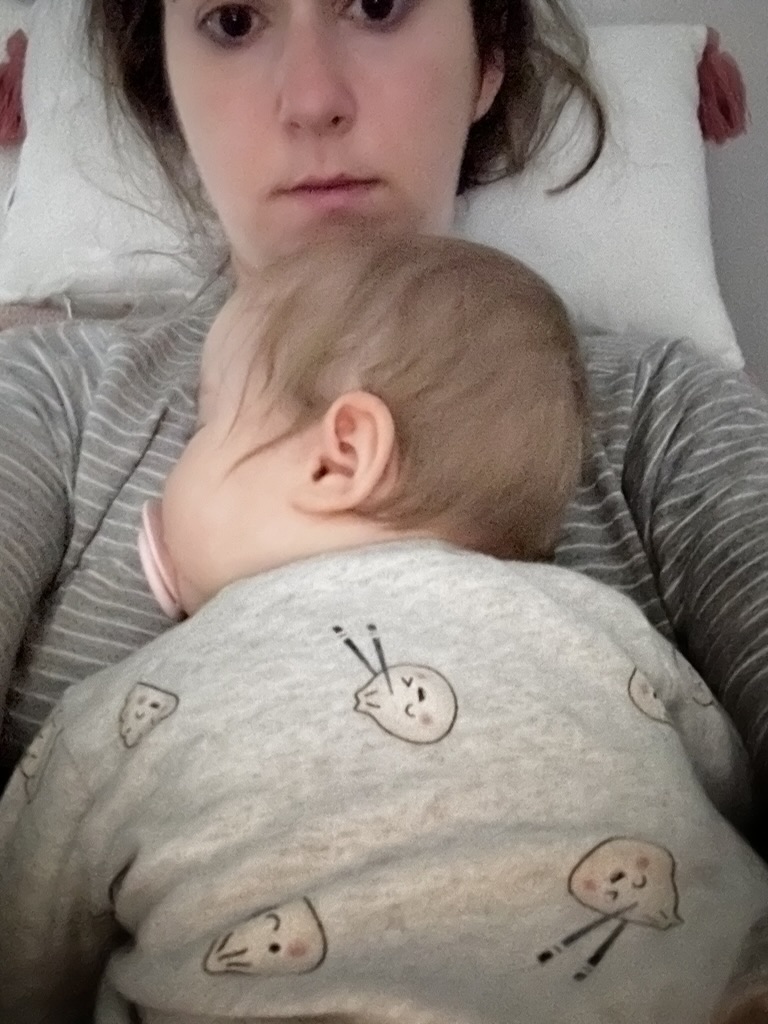
I've been there. When my daughter was a baby, I was mostly on my own at night. Some of the hardest times were sitting in her dark room, singing the same song over and over, rocking her and begging her to go to sleep.
First, check these
Before you change anything, rule out the things a plan can't fix:
- They might be hungry. If you're not sure, feed them.
- They have a dirty diaper. Change them quietly, with the lights low.
- They seem sick or hurt, or they have a fever or a tooth about to come through. Care for them, check with their doctor, and wait until they're back to their usual self.
- Their breathing seems off. Go in right away. If they're struggling to breathe, call 911. Otherwise, take them to the emergency department.
Then track 2 or 3 normal nights
It's hard to know what's really happening when you're this tired. Before you start, write down a few nights so you have something to compare to:
- Their longest stretch of sleep (your best guess)
- How many times they were awake for 20 minutes or more
- How many times they woke and needed you, marking which were feeds
- How manageable the night felt
Want a page for that? My free 3-night sleep tracker gives you one page to fill in. Get the free tracker
What to do when your baby wakes every hour or two
-
Set up bedtime
Turn the lights down around the house 30 to 60 minutes before bed. Make the room where your baby sleeps dark, cool and quiet. Then keep your routine in the same order every night: feed, bath or a quick wipe-down, diaper and pyjamas, a song or a short book, white noise on, lights off, into the crib.
-
Feed first, not last
Feed about 20 minutes before bed, in a different room, with the lights on, and keep them fully awake. Here's how to stop feeding your baby to sleep, step by step.
-
Put them in the crib awake, with a sleep phrase
Pick something short, like "Nighty night, time to sleep." Say it every time you put them down and every time you leave the room.
-
Choose how you'll help them settle
Check in. You put your baby down awake and leave the room. If they cry, you go back in for short check-ins, and the waits slowly get longer. There will be some crying. This approach has the strongest research behind it.
Stay close. You stay beside the crib at first, and step back a little at a time over many nights. There's no timer. It's slower, usually a few weeks, and it has less research behind it.
Whichever you choose, the best plan for you is the one you can stick with.
Sources: Hall et al., BMC Pediatrics, 2015; Gradisar et al., Pediatrics, 2016; Blunden et al., Archives of Women's Mental Health, 2022.
-
Do the same thing at every waking
When they wake in the night, take care of any feeding or care first. Then say your sleep phrase and settle them the same way you did at bedtime. Changing the plan every few nights makes it harder for both of you.
-
Decide when morning starts
Pick your earliest start to the day, like 6 a.m. Before that, it's still night: if they wake at 5:30, follow your plan. Then make morning obvious. Open the blinds, turn on the lights, and have the first feed outside their room.
How long until the wakings ease?
I can't promise you how your baby's nights will go. Nobody honestly can. What you can do is pick a day to look back before you start. A week is a good choice.
Look at the whole week, not one night. Signs it's helping: their longest stretch is getting longer, there are fewer wakes of 20 minutes or more, they need you fewer times, or the nights feel more manageable.
Early waking is often the last thing to improve. Sleep is lighter in the early morning, so settling can take longer.
Looking after you at 2 a.m.
This asks a lot of you, in the middle of the night, on very little sleep. Looking after yourself is part of the plan, not an extra.
- Try a slow breath: in through your nose, one more short breath in, then let it all out slowly through your mouth. Repeat a few times.
- If you listen to something, keep one earbud in and one ear free, so you can still hear them. Audiobooks and podcasts saved my sanity.
- Doing this alone? It's harder, but not impossible. Line up whatever support you can, even a friend to text in the morning.
- If you ever feel angry or upset, put them down somewhere safe, like their crib, and step away for a moment to calm yourself.
In crisis or thinking about harming yourself? Call or text 988 (US and Canada).
Safe sleep, every sleep · not a choice, always
- On the back, firm flat mattress, nothing else in the crib
- Never on a couch, armchair, swing or bouncer
- Stop swaddling once your baby shows signs of rolling
- If you feed in your bed, put your baby back in their own sleep space before you go to sleep. If you might fall asleep during the feed, move pillows, blankets and loose bedding away first. If you do fall asleep, move your baby back as soon as you wake
Want the whole plan for 2 a.m.?
My guide, There Has to Be a Better Way, gives you both plans in full, what to do at every waking, and a way to tell if it's helping. For babies 6 to 12 months.
See the guideRelated: How to stop feeding your baby to sleep · Baby only sleeps when held? · Sleep training without crying it out · Chair method vs Ferber · Is sleep training bad for babies?
Questions parents ask
Why does my 8 month old keep waking up at night?
Often for the same reason at 8 months as at 6 or 10. Everyone wakes between sleep cycles, and babies often look for whatever was there when they fell asleep, like a feed or rocking. Many babies 6 to 12 months old still wake at night, and it doesn't mean you did anything wrong.
Is it normal for a 9 month old to wake every 2 hours?
Waking at night is common at this age. Waking every hour or two is hard to keep up, though, and you can decide it's time for a change even when it's common.
My baby wakes up at night but isn't hungry. What do I do?
If you're not sure, feed them. You never have to prove they're hungry. Once any feeding or care is done, say your sleep phrase and settle them the same way you did at bedtime.
My baby wakes up at night and won't go back to sleep, or wants to play. What now?
Pick your earliest start to the day, like 6 a.m. Before that, it's still night, so keep things dark and quiet and follow the same plan you use at bedtime. If they seem sick or hurt, the plan stops and you care for them.
My baby wakes up every time the pacifier falls out. What can I do?
Once they're asleep, there's no need to put it back in. Try keeping a few pacifiers in the crib. During the day, make it a game: help them practise finding one and putting it in themselves.
Should I feed my baby every time they wake at night?
If your baby still feeds at night, keep feeding them. How many night feeds your baby needs is a question for their doctor. What you can change is how they fall asleep after the feed.